
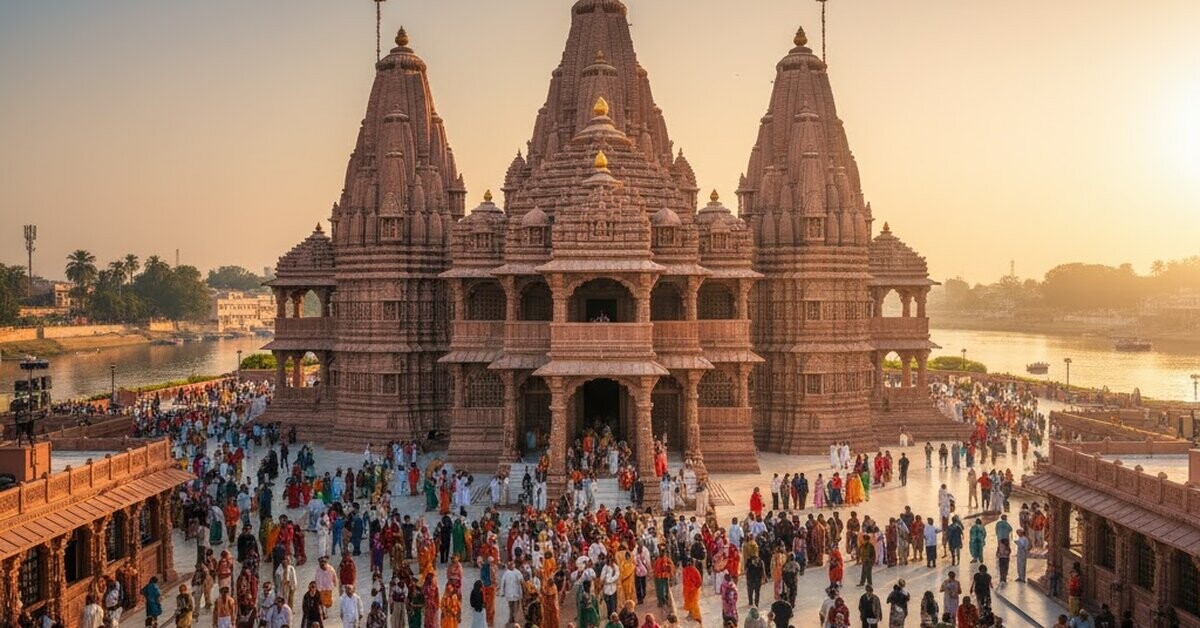
Varanasi–Ayodhya–Prayagraj 2 Nights Private Tour , Ever dreamed of experiencing three of India’s most sacred cities in one seamless spiritual journey? Imagine starting your day watching the sun rise over Varanasi’s ancient ghats, spending your afternoon at Lord Ram’s birthplace in Ayodhya, and concluding at the holy confluence where three rivers meet in Prayagraj. This isn’t just sightseeing—it’s a profound pilgrimage through the spiritual heart of India, and a 2-night private tour makes it not only possible but absolutely transformative. Let’s explore how this perfectly designed journey can become your gateway to understanding Hindu spirituality at its deepest levels.

The sacred triangle of Uttar Pradesh
Three Cities, Three Spiritual Dimensions
Varanasi–Ayodhya–Prayagraj 2 Nights Private Tour , Varanasi, Ayodhya, and Prayagraj form what many call the sacred triangle of Uttar Pradesh—each representing distinct yet complementary aspects of Hindu spirituality. Varanasi embodies Shaivite worship and the eternal cycle of life, death, and liberation. Kashi, as it’s traditionally known, promises moksha to those who leave their mortal bodies within its sacred boundaries. The ghats, the temples, the very air seems saturated with thousands of years of prayers and rituals.
Ayodhya represents Vaishnavite tradition and the living presence of dharma through Lord Ram’s story. Walking through Ayodhya means stepping into the Ramayana itself—every temple, every ghat, every stone connects to events from this foundational epic. Meanwhile, Prayagraj offers the sacred Triveni Sangam where Ganga, Yamuna, and the mystical Saraswati converge, creating what Hindus consider one of Earth’s holiest spots. Together, these three cities provide a comprehensive spiritual education that individual visits simply cannot match.
Why This Combination Works Perfectly
Varanasi–Ayodhya–Prayagraj 2 Nights Private Tour , Geography favors this particular pilgrimage circuit. Varanasi to Ayodhya is approximately 200 kilometers (4-5 hours drive), while Ayodhya to Prayagraj is about 160 kilometers (3.5-4 hours). The distances are manageable, roads have improved significantly, and the logical flow—starting with Varanasi’s philosophical depth, moving to Ayodhya’s devotional intensity, and concluding at Prayagraj’s purifying confluence—creates a narrative arc that deepens your spiritual experience progressively.
For travelers with limited time, combining these cities maximizes spiritual impact. You’ve already invested in reaching Uttar Pradesh; visiting all three locations means you’re not leaving major sacred sites unvisited only to regret it later. It’s comprehensive pilgrimage planning that respects both your spiritual aspirations and practical time constraints.
What Makes a Private Tour Special
Complete Flexibility
Varanasi–Ayodhya–Prayagraj 2 Nights Private Tour , Private tours mean you’re not bound by rigid group schedules. Want to spend an extra hour at Ram Janmabhoomi because you’re deeply moved? No problem. Prefer skipping a particular temple that doesn’t resonate with your spiritual interests? Entirely your choice. Need an afternoon rest because you’re jet-lagged or simply tired? Your itinerary adjusts accordingly.
This flexibility becomes invaluable during spontaneous spiritual moments—perhaps you encounter a particularly moving aarti ceremony and want to stay longer, or discover a small neighborhood temple with fascinating history. Group tours rush past these moments; private tours embrace them. You’re crafting your own spiritual journey rather than following someone else’s predetermined path.
Personalized Experience
Private tours allow deep personalization. Your guide focuses exclusively on your interests—if you’re fascinated by architecture, they emphasize temple construction and historical development. If mythology captivates you, they elaborate on Ramayana stories and local legends. Photography enthusiasts get guidance on optimal shooting locations and golden hour timing.
Dietary preferences, physical limitations, special religious observances—everything adapts to your specific needs. Traveling with elderly parents? The pace slows and rest periods increase. With curious children? The guide engages them with age-appropriate stories and interactive elements. This isn’t cookie-cutter tourism; it’s tailored spiritual exploration designed around you.
Detailed 3-Day Itinerary
Day 1: Varanasi Exploration
Begin early (5:00 AM) with a sunrise boat ride on the Ganges, witnessing Varanasi’s ghats awakening with morning prayers, bathing rituals, and the first light painting the ancient cityscape golden. This experience alone justifies the entire journey—the profound spirituality of thousands performing ablutions and prayers as the sun rises is unforgettable.
After breakfast at your hotel, visit Kashi Vishwanath Temple, one of twelve Jyotirlingas and Varanasi’s spiritual heart. Your guide navigates the complex lanes and security procedures efficiently. Explore other significant sites like Sankat Mochan Hanuman Temple and Durga Temple. Afternoon visit to Sarnath, where Buddha delivered his first sermon after enlightenment—a beautiful addition showing Varanasi’s multi-religious significance.
Evening return to the ghats for the spectacular Ganga Aarti at Dashashwamedh Ghat. Hundreds of devotees gather as priests perform synchronized rituals with massive oil lamps, bells ringing, and devotional songs filling the air. Overnight in Varanasi hotel, processing the day’s spiritual intensity.
Day 2: Varanasi to Ayodhya
Morning departure around 8:00 AM after breakfast. The 4-5 hour drive includes a comfort stop midway. Arrive in Ayodhya by 1:00-2:00 PM, check into your hotel, and enjoy lunch. Afternoon begins your Ayodhya temple circuit starting with Ram Janmabhoomi—the magnificent temple at Lord Ram’s birthplace. Security procedures are thorough but your guide ensures smooth navigation.
Continue to Hanuman Garhi, the fortress temple requiring a 76-step climb (optional based on your fitness), followed by Kanak Bhawan with its stunning golden crowns adorning Ram and Sita’s idols. As evening approaches, visit the Saryu River ghats, perhaps witnessing the evening aarti if timing aligns. The peaceful riverside atmosphere provides perfect reflection time after a day of travel and intense darshan. Overnight in Ayodhya hotel.
Day 3: Ayodhya to Prayagraj and Departure
Morning visit to remaining Ayodhya temples—Nageshwarnath Temple (ancient Shiva temple), Treta Ke Thakur, and Sita Ki Rasoi based on your interest and remaining energy. Checkout around 10:00-11:00 AM and begin the 3.5-4 hour journey to Prayagraj. Arrive by 2:00-3:00 PM, proceeding directly to Triveni Sangam for the sacred confluence darshan.
Consider a boat ride to the actual meeting point of the rivers—a spiritual highlight seeing the distinct colors where waters merge. If time permits, visit Allahabad Fort (exterior views and accessible sections) and Hanuman Mandir with its unique reclining Hanuman idol. Conclude your tour with drop-off at Prayagraj railway station or Varanasi airport as per your onward travel plans. The tour typically ends by 6:00-7:00 PM.
What Your Private Tour Includes
Transportation
Private AC vehicle (sedan for 2-3 people, SUV/Innova for 4-6 people) with experienced driver for entire duration. The vehicle is yours exclusively—no sharing with strangers, no fixed routes. All fuel, tolls, parking fees, and driver allowances are typically included. The driver knows all three cities intimately, suggesting optimal routes and timing to avoid traffic congestion.
Accommodation
Two nights in comfortable, clean hotels—one night in Varanasi and one in Ayodhya. Standard packages use 3-star equivalent hotels; premium packages offer 4-5 star properties. Rooms include attached bathrooms, air conditioning, breakfast, and necessary amenities. Hotels are chosen for location convenience—close to major temples, reducing travel fatigue while maximizing spiritual experience time.
Guide Services
Knowledgeable English-speaking guide accompanies you throughout, though some private tours offer guides at each destination rather than one guide for the entire journey. Guides handle entry tickets, navigate complex temple layouts, share historical and mythological context, and answer your questions. Their local expertise transforms sightseeing into genuine learning and spiritual exploration.
Experiencing Each Sacred City
Varanasi: The Eternal City
Varanasi overwhelms your senses—the cacophony of temple bells, the visual spectacle of colorful ghats crowded with pilgrims, the aroma of incense mixing with street food, the tactile experience of ancient stone beneath your feet. Mark Twain called it “older than history, older than tradition, older even than legend,” and you feel this antiquity viscerally.
The city’s spiritual power lies in its unflinching embrace of life’s full cycle. You witness joyous weddings and somber cremations within meters of each other. This confrontation with mortality liberates rather than depresses—you understand impermanence deeply, making life’s present moment more precious. Your guide helps process these intense experiences, providing context that transforms potential shock into spiritual insight.
Ayodhya: Land of Lord Ram
Ayodhya offers a different energy—more devotional, more focused, more story-driven. Every temple connects to specific Ramayana episodes. Your guide doesn’t just show buildings; they narrate the epic, bringing ancient events alive. You’re not visiting where Ram was born; you’re standing in the delivery room of dharma itself, where principles of righteousness, duty, and honor took human form.
The city’s recent development around Ram Janmabhoomi adds contemporary relevance to ancient devotion. You witness living faith—the temple complex represents modern India’s largest religious construction, demonstrating Hinduism’s continuing vitality. The pride locals take in their city’s Ram connection is palpable and infectious, deepening your own connection to the tradition.
Prayagraj: The Confluence
Prayagraj provides spiritual culmination. After Varanasi’s philosophical depth and Ayodhya’s devotional intensity, the physical act of bathing at Sangam becomes a ritual synthesis—you’re literally immersing yourself in sacred geography while carrying the lessons and prayers accumulated from previous stops. The boat ride to the confluence point reveals the rivers’ distinct colors merging, a visual metaphor for the journey’s integration of diverse spiritual experiences.
The scale of faith here, especially during Magh Mela or Kumbh Mela, staggers imagination. Even during regular periods, the constant flow of pilgrims bathing, praying, and making offerings demonstrates Hinduism’s grassroots vitality. You’re not observing ancient rituals in museums; you’re participating in living traditions that connect you to thousands of years of spiritual seekers who’ve stood at this exact spot.
Benefits of a 2-Night Package
Two nights offer the sweet spot between comprehensive coverage and manageable pace. Single-night tours rush too much, turning spiritual pilgrimage into exhausting tourism. Three or more nights might feel excessive for focused pilgrims with time constraints. Two nights allow adequate time at each destination without racing or dawdling—you experience rather than merely see.
The pacing also aids spiritual absorption. Each evening provides reflection time for processing the day’s experiences. You’re not immediately jumping to the next city; you sleep on insights gained, allowing deeper integration. Morning freshness at each new destination means you arrive mentally and emotionally ready for new spiritual dimensions rather than carrying fatigue that dulls experience.
Cost Considerations
Private 2-night tours typically cost ₹15,000-₹45,000 for 2-3 people depending on vehicle type, hotel category, and inclusions. Budget packages use comfortable 3-star hotels and sedans (₹15,000-₹22,000). Mid-range packages offer better hotels and SUVs (₹25,000-₹35,000). Premium packages provide luxury hotels, superior vehicles, and additional experiences like VIP darshan arrangements (₹35,000-₹45,000+).
Compare what’s included—some quotes cover everything (hotels, transport, guide, meals, entry tickets) while others charge these separately. Hidden costs to clarify: are tips included? What about camera fees at monuments? Special puja expenses? Understanding total cost prevents unpleasant surprises. Per-person costs decrease significantly for groups of 4-6 splitting expenses, making private tours economically competitive with group packages while offering vastly superior flexibility.
Best Time to Book This Tour
October through March offers optimal weather—pleasant temperatures, clear skies, and comfortable travel conditions. Avoid April-June’s brutal heat (40°C+) and July-September’s monsoon humidity and potential flooding at Prayagraj’s confluence. Festival times like Ram Navami (March-April), Deepavali (October-November), or during Magh Mela (January-February in Prayagraj) offer special spiritual atmosphere but require much earlier booking and command premium pricing.
Book 3-4 weeks ahead during regular seasons for good availability and rates. Festival periods or peak tourist season (November-January) require 2-3 months advance booking. Last-minute bookings (under one week) risk limited availability, higher prices, and accommodation compromises.
Conclusion
A Varanasi–Ayodhya–Prayagraj 2-night private tour represents spiritual travel at its finest—comprehensive yet manageable, structured yet flexible, affordable yet comfortable. You’re not just collecting temple stamps; you’re undertaking a transformative journey through three sacred cities that together reveal Hinduism’s philosophical depth, devotional beauty, and living vitality.
As your tour concludes at Sangam’s confluence, you realize the external journey—traveling between cities, visiting temples, witnessing rituals—has catalyzed an internal journey. The rivers merge outside, but something equally significant has merged within: intellectual understanding, emotional devotion, and spiritual awakening flowing together into integrated experience. You return home carrying not just photographs and prasad, but a deepened connection to tradition, a renewed sense of purpose, and memories that will nourish your spiritual life for years ahead.
Frequently Asked Questions (FAQs)
u003cstrongu003e1. What is the total cost of a Varanasi–Ayodhya–Prayagraj 2-night private tour?u003c/strongu003e
Private tours for 2-3 people typically cost ₹15,000-₹45,000 total depending on accommodation level, vehicle type, and inclusions. Budget packages (basic 3-star hotels, sedan car) cost ₹15,000-₹22,000. Mid-range packages (comfortable 3-star hotels, SUV) range ₹25,000-₹35,000. Premium packages (4-5 star hotels, luxury SUV, additional services) cost ₹35,000-₹45,000+. Prices usually include accommodation (2 nights with breakfast), private AC vehicle with driver, guide services, and sometimes entry tickets. Groups of 4-6 splitting costs bring per-person expenses to ₹5,000-₹10,000, making private tours economical.
u003cstrongu003e2. Can we customize the itinerary based on our interests and physical abilities?u003c/strongu003e
Absolutely—that’s the primary advantage of private tours. You can extend time at locations that move you spiritually, skip temples that don’t interest you, adjust daily start times based on your natural rhythm, include additional sites like Sarnath or Chunar Fort, modify the pace for elderly members or children, and arrange specific experiences like special pujas or cultural programs. Discuss customization desires when booking. Reputable operators gladly adjust itineraries within the package framework. Major changes affecting costs (luxury accommodation, extended duration, additional destinations) are negotiable with transparent pricing adjustments.
u003cstrongu003e3. What is the best starting point: Varanasi or Prayagraj?u003c/strongu003e
Most tours start from Varanasi as it has better connectivity—international airport, major railway junction, and more accommodation options. Starting in Varanasi also makes spiritual sense—it provides philosophical grounding before Ayodhya’s devotional intensity and Prayagraj’s ritualistic conclusion. However, tours can start from Prayagraj or Ayodhya if that suits your travel logistics better. The reverse circuit (Prayagraj→Ayodhya→Varanasi) works equally well spiritually. Discuss your arrival/departure points with operators—they’ll design optimal routing regardless of starting location. Most packages include pickup from airport/railway station and drop-off at your departure point.
u003cstrongu003e4. Are meals included in the private tour package?u003c/strongu003e
Typically, packages include hotel breakfasts for both nights. Lunches and dinners are usually excluded, allowing flexibility to choose restaurants based on your preferences and giving cost control. Your guide recommends good vegetarian restaurants at each destination. Some premium packages include all meals at pre-selected quality restaurants. When booking, clarify meal inclusions explicitly. Budget approximately ₹300-600 per person per day for excluded meals (lunch and dinner). Special dietary requirements—Jain food, no onion-garlic, allergies—should be communicated during booking so guides can recommend appropriate restaurants.
u003cstrongu003e5. Is this tour suitable for elderly people or families with young children?u003c/strongu003e
Yes, with appropriate adjustments. Private tours’ flexibility accommodates diverse needs—slower pace for elderly members, frequent rest stops, hotels with elevators, skipping temples with difficult access like Hanuman Garhi’s 76 steps, and shorter daily schedules with afternoon rest periods. For children, guides modify explanations with engaging stories, itineraries include shorter temple visits preventing boredom, and vehicles provide comfortable space for naps. Inform operators about age-related needs during booking—they’ll suggest suitable accommodation, adjust pacing, and arrange assistance like wheelchairs if needed. Multi-generational pilgrimages are common and well-accommodated with proper planning.




[…] your Varanasi Ayodhya Tour Package confirmed is a fast, no-stress process. Message or call our team on WhatsApp with your travel […]